
Quanscient MultiphysicsAI for MEMS microspeaker design and optimization
A full breakdown of a MEMS microspeaker case with AI-driven design exploration.

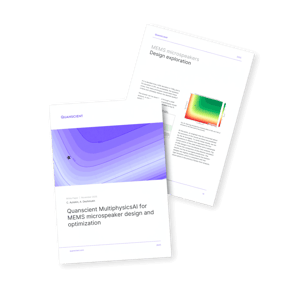
Download white paper
Capture in-depth insights on multiphysics simulations and expert design methodologies.








.png?width=300&name=Logo_Krohne.svg%20(1).png)



Quanscient Allsolve
See how it could work for you
Submit the form to talk with our experts—we'll respond within 1 business day. You'll learn:
- How Allsolve could fit your use case
- What results to expect (accuracy, runtime, design exploration capabilities and rough cost range)
- How it could plug into your workflow today
Interested in just seeing an on-demand demo? Watch the 3-minute demo here