
1D advection-diffusion on real quantum hardware
First quantum lattice Boltzmann simulation executed on a real quantum computer. Proved that near-term noisy devices can natively run macro-scale multiphysics simulations.
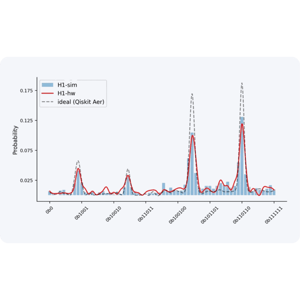
In the summer of 2022, we successfully solved a 1D advection-diffusion equation on an actual, physical quantum computer.
Before this, demonstrations of this complexity were stuck on classical machines just emulating quantum environments. We proved that actual, noisy hardware could generate highly accurate physics results on a 16-point grid.
Running multiphysics on early, noisy quantum devices requires extreme algorithmic efficiency so the calculations don't fail mid-run.
The algorithm was deployed on a Quantinuum Model H1-1 trapped-ion quantum computer.
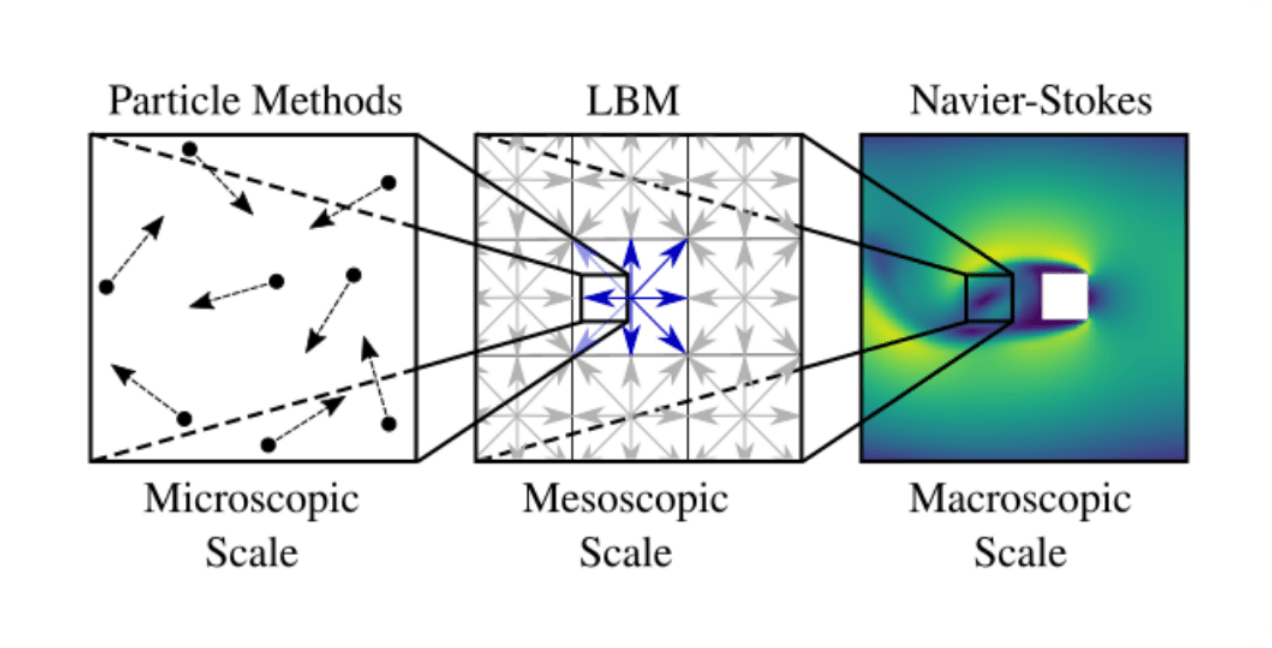
We used our proprietary Quantum Lattice-Boltzmann Method to map the problem.
We achieved a massive reduction in quantum circuit depth by parallelizing the quantum basis state shift (increment and decrement operations), drastically reducing the number of required quantum gates.
This marked a major milestone on the roadmap to quantum advantage in computational fluid dynamics.
It laid the mathematical foundation for solving complex industrial thermal problems.
It validated our exponential scaling approach in the real world, proving that adding just a single working qubit effectively doubles the size of the simulation grid.