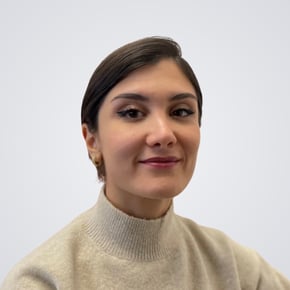
Guest Author
Pietro Zanotta
Quantum Engineering Intern
Introduction
Last summer, Pietro Zanotta joined Quanscient as a Quantum Engineering Intern. At the time, he had just completed his bachelor’s degree and was preparing to start his PhD, making the internship a natural transition point in his academic and professional journey.
During his time at Quanscient, Pietro worked with the Quantum Algorithms team and focused on research-driven projects in quantum machine learning. We spoke with him about his experience at the company, from his first days in Tampere to the challenges he faced and the lessons he took with him. Below, he shares his internship experience in his own words.
From academia to Quanscient
I studied Quantitative Economics at the Università della Svizzera Italiana, and this internship took place right after the end of my bachelor’s degree, a few months before the beginning of my PhD.
I discovered Quanscient through a LinkedIn post about quantum startups in Europe, which led me to spend some time online learning more about the company. Before starting the internship, I was expecting to work on interesting quantum research while also having the opportunity to explore the Finnish landscape.
Why Quanscient?
What stood out about Quanscient compared to other companies
I’ve always been fascinated by the startup trajectory, partly through seeing friends become founders and partly by observing how the industry narrative is shifting. There is a growing sense that the most impactful work is no longer happening in big tech, but in agile startups. I wanted to move beyond the “romanticized” version of this idea and experience it firsthand.
Motivation to apply
At that point, I had already done research at universities in both Europe and the US, but I was curious about the other side.I wanted to get firsthand experience in corporate R&D to see the perks of both worlds before deciding where to focus after my PhD.
What really sold me on Quanscient, though, was the “Spare the sheep” video on YouTube. It was hilarious, and it made me realize the company had a culture that didn’t take itself too seriously, which is exactly the kind of environment where I work best.
On top of that, I’ve always been fascinated by Finland’s culture and nature, so it felt like the perfect move. Lastly, since I’m from Italy, being in Finland felt like a great middle ground: close enough to home that I could actually visit my family every now and then, which was much harder when I was living in the US.
Perception of Quanscient before joining
Even before applying, the website gave me the impression that Quanscient was a collection of incredibly talented people. What really clicked for me, however, was my first meeting with Dr. Valtteri Lahtinen. When he mentioned that I could lead my own project rather than just being a research assistant, I’ll be honest, it was a bit intimidating.
It was the first time I’d have that much responsibility, but I knew that kind of ownership was exactly the experience I needed to prepare for my upcoming PhD.
First days and onboarding
The first day was actually a real disaster, since due to some logistical issues with my flight I arrived late at the office to meet the quantum team. However, this didn’t turn out to be a big problem. Eventually, I was introduced to the research the lab was doing, along with their deadlines and key goals.
Overall, the onboarding felt relatively smooth from a technical perspective. It took me a bit longer to integrate socially due to some initial shyness on my part, but attending sports activities and afterwork events definitely helped. Integrating into the workflow was also quite simple, since I was given a lot of autonomy and mainly worked independently, reporting back to my supervisors.
My overall impression matched my expectations: a community of high achievers who do not take themselves too seriously. I also realized how much importance the company places on work–life balance, which was the main difference I noticed compared to my previous experiences in academia.
Role and responsibilities
I worked within the Quantum Algorithms team, where my main focus was exploring and evaluating different Quantum Machine Learning (QML) techniques. The goal was to assess how they could be applied to the Quantum Lattice Boltzmann method that the rest of the team was developing.
While I had regular syncs with my supervisors and the broader team, my project was highly autonomous. I had my own deadlines and focused primarily on the R&D side. Since this was an internal exploration rather than a commercial product feature, I had the freedom to dive deeply into the research without limitations imposed by commercial constraints.
What I worked on
My experience can be divided into two parts. During the first months, I worked on applying Quantum Generative Adversarial Networks, a QML architecture used to sample target distributions, within the context of the Quantum Lattice Boltzmann method. We later realized that this approach had some practical limitations, which led us to pivot to a different project.
In the second phase, I worked on exploiting certain properties of quantum circuits to enable faster inference in classical neural networks, as well as uncertainty quantification (i.e., the ability to estimate how confident a network is about a prediction). During this phase, I truly realized how valuable feedback from people outside the quantum lab could be, especially from Dr. Çağlar Aytekin, who played a pivotal role in supporting me during the ideation stage.
Learning experience
This experience taught me a great deal, both technically and non-technically. From a technical standpoint, I significantly improved my QML skills, gained a better understanding of its limitations, and became much more proficient in PyTorch, which is now my primary tool during my PhD.
From a non-technical perspective, I learned the importance of clear communication as a prerequisite for receiving useful and constructive feedback. The internship also taught me how to manage my own deadlines and trust my decision-making.
While this was intimidating at first, it ultimately showed me that I thrive when given the space to lead my own research exploration.
Working with the team
I believe the team culture was excellent, even though many team members worked remotely and Valtteri was often traveling. Mentorship was structured and consistent. I reported my progress bi-weekly to the entire team, who were always supportive.
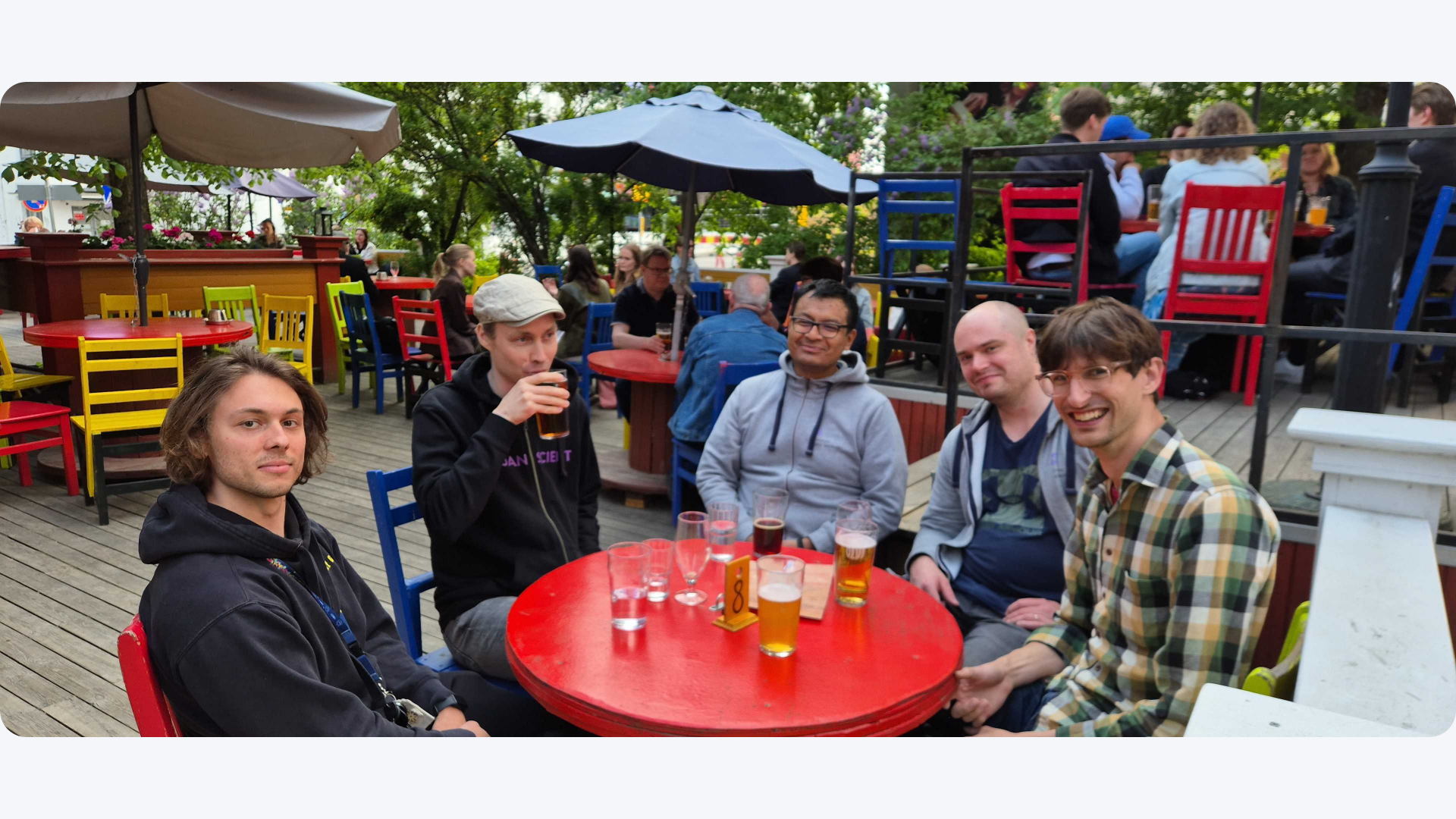
That said, I think it would have been nice to have more formal knowledge-sharing moments, such as short seminars. Nevertheless, we also had many informal interactions during summer retreats and afterwork events, which allowed me to get to know my supervisors and colleagues from a more personal perspective.
My only regret is not asking more questions, as I believe that would have given me even more valuable insights.
Quanscient Quantum Labs
Quantum-powered multiphysics simulations
Explore quantum advantage in physics and multiphysics simulations →
Challenges and personal growth
The most challenging part of the internship was the first month, when I was still getting to know my colleagues, making friends, and adapting to the city. During that time, I wasn’t exploring Tampere and its surroundings as much as I would have liked.
However, this phase pushed me to connect more deeply with the people at Quanscient, which turned out to be an enriching experience. It was also challenging at first to trust my own decisions regarding which research directions to pursue. Thanks to the mentorship from Valtteri, Dr. Ljubomir Budinsky, and Çağlar, and the trust they placed in me, I developed much stronger self-confidence.
Looking back: Key takeaways
This internship meant a lot to me, both personally and professionally. I had the opportunity to observe how highly talented people interact and collaborate, while also being exposed to a new culture, with all the challenges that come with it.
The independence and self-confidence in research that I developed are directly relevant to my current PhD journey. Among the memories I cherish most are the informal moments with the quantum team, especially the afternoon spent playing board games in Bulgaria, where after five months of virtual collaboration I finally met Ljubomir in person, and the karaoke night during the summer retreat in Turku, where I realized just how deeply metal music is rooted in Finnish culture.
Advice to future interns
Rather than giving generic advice, I’d like to share what I would do differently. First, I would be more proactive: organizing afterwork activities and attending startup events hosted by accelerators and communities in Tampere.
I would also warn prospective interns that making friends with Finns can take time, and that outside an academic environment, meeting new people requires genuine effort, so it’s good to be prepared for that.
I strongly encourage future interns to talk as much as possible with everyone at Quanscient. In my experience, the people there are exceptional, and there is something to learn from each of them. Lastly, I would recommend exploring Finland as much as possible and enjoying the incredible nature the country has to offer.