
Introduction
Electrostatically actuated silicon-based MEMS microspeakers represent a key enabling technology for next-generation consumer earphones. Their compact design and precision control offer enhanced sound quality, but nonlinear multiphysics effects introduce harmonic distortion that can degrade performance. The design goal of this study is to achieve superior sound quality with less than 1% total harmonic distortion (THD).
A fully coupled multiphysics model incorporating solid mechanics, electrostatics, and compressible laminar flow was implemented using Quanscient Allsolve. Nonlinear harmonic balance analysis was performed on a deformable mesh to capture the frequency-dependent response and harmonic distortion in displacement and pressure. The results were validated against experimental data from the literature.
A large-scale dataset of nonlinear simulations was then used to train an AI surrogate model that supports design optimization and inverse analysis. The surrogate model enables Pareto front exploration to maximize sound pressure level (SPL) while minimizing THD. The final optimized design achieved ~30% improvement in SPL while maintaining THD under 0.15%. It also provides uncertainty quantification of the model and allows further use in the Monte Carlo analysis for the decision making to maximize yield in the manufacturing process.
This blog post demonstrates how MultiphysicsAI, powered by Quanscient Allsolve, can drive MEMS design optimization on design and manufacturing fronts with accuracy, scalability, and speed.
Challenges with the current situation
MEMS microspeakers are critical components in high-end consumer electronics. Specifically, the silicon-based microspeakers rely on electrostatic actuation, where a voltage difference drives motion in thin silicon-based structures. The performance of these devices depends heavily on nonlinear coupling between electrostatic, mechanical, and acoustic fields.
Traditional linear modeling approaches often fail to capture nonlinear effects that give rise to harmonic distortion, and the transient modeling needs longer simulation times to reach steady-state periodic behavior. Experimental characterization can be expensive and time-consuming, while simplified simulations lack predictive accuracy.
To find the optimal design, the number of simulations required can be very high depending on the number of design control parameters and still may not provide the fully optimal design. After finalizing a design that meets performance and compliance requirements, the manufacturing processes due to their inherent tolerances can introduce uncertainties in the real device characteristics.
What is the added value with Quanscient MultiphysicsAI?
To achieve precise control over key performance indicators (KPI), such as sound pressure levels (SPL) and minimize harmonic distortion, it is essential to construct multiphysics simulation models that accurately represent nonlinear interactions.
Modeling enables design optimization before fabrication and reduces reliance on costly prototype iterations. AI enables the learning of the complex nonlinear relationship between the geometric design and the KPIs, thereby providing a surrogate for the multiphysics model.
This surrogate enables scanning more designs rapidly and pushing the boundaries of the training data, and at the same time, also enables quantifying the effect of the uncertainties in the KPIs and the Monte Carlo analysis on the final manufactured design performance so that the engineers can make informed decisions.
The approach captures nonlinear effects in electrostatic actuation and mechanical deformation while computing harmonic distortion directly in the frequency domain. It supports large-scale parallelization and efficient data generation, which is essential for training AI-based surrogate models. These surrogates enable broader design exploration, design refinement, uncertainty quantification, and Monte Carlo analysis, helping engineers evaluate performance variability and make informed design decisions.
Case example
Microspeakers
Simulation methodology
This study focuses on electrostatically actuated silicon-based microspeakers, which are increasingly used in high-quality in-ear consumer electronics. The primary design objective is to achieve precise control over sound quality, characterized by maintaining an appropriate sound pressure level (SPL) while minimizing total harmonic distortion (THD) in the output pressure. For premium acoustic performance, the THD requirement is typically below 1%.
To meet these design goals, a comprehensive multiphysics simulation model was developed to capture the nonlinear effects responsible for harmonic distortion in the acoustic waveform. The analysis was performed using harmonic balance simulation with fully coupled solid mechanics, electrostatics, and linearized compressible laminar flow equations on a deformable mesh. This approach enables direct computation of the nonlinear frequency response, from which SPL and THD are extracted at selected spatial locations.
The study further includes a parametric design-space exploration, where geometric and operational parameters are systematically varied to generate a rich dataset. This dataset forms the basis for training an AI surrogate model, which is subsequently used for design optimization and performance prediction. The methodology also supports the potential for inverse modeling, where the surrogate could predict design parameters from desired output characteristics, an aspect planned for future investigation.
Example below is based on the study presented by Melnikov et al. (2021) that presented coulomb-actuated microbeams.
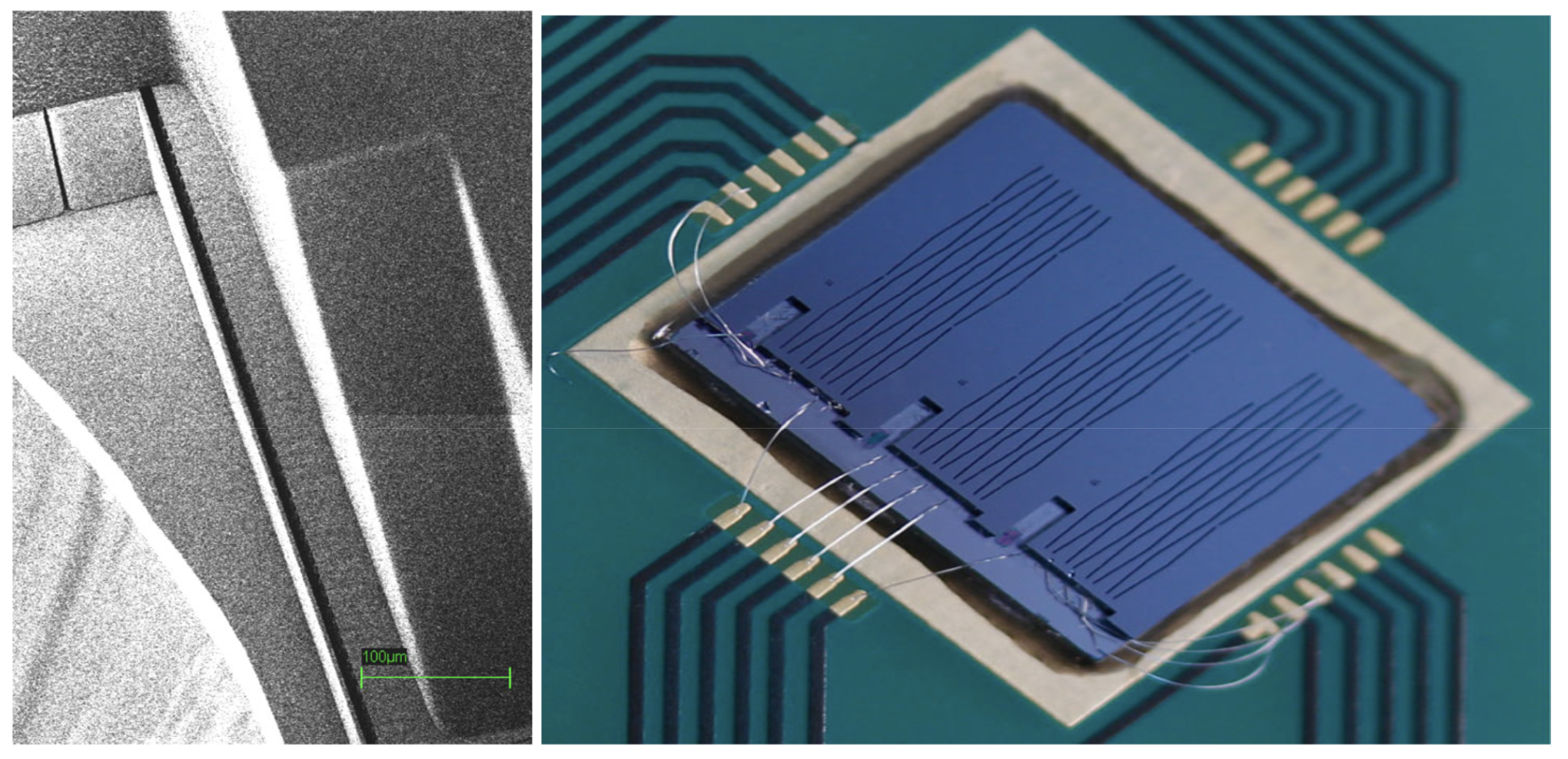
Fig. 1: The actual manufactured microbeam (left), Melnikov et al. 2021 [1]; the full device (right), Kaiser et al. 2019 [2].
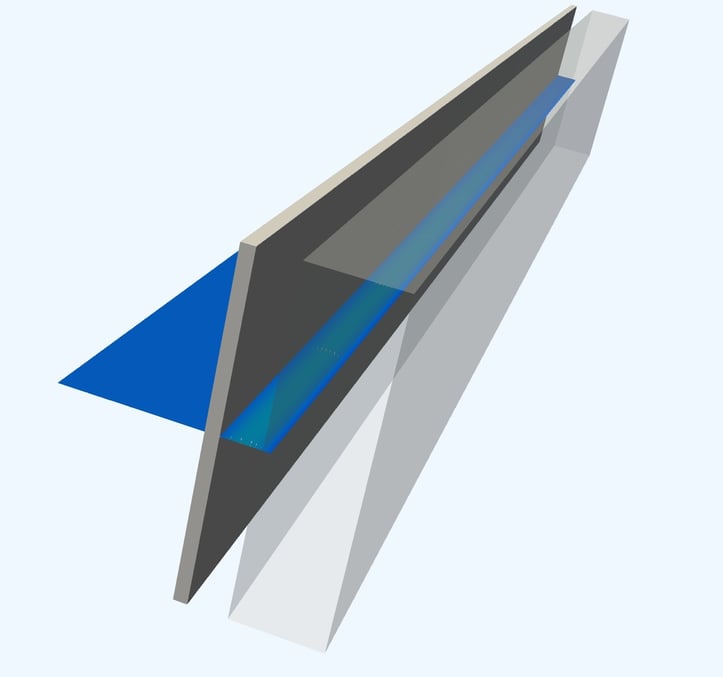
Fig. 2: Illustrative animation of the electrostatic actuation driving the beam in a harmonic manner and the interaction between the beam structure and the gas film.
Simulation setup and modeling assumptions
The model used for the simulation was simplified to capture the essential physics while maintaining computational efficiency. It consists of two parallel plates separated by an air gap. The bottom plate is fixed, while the top plate is clamped at both ends and free to move elsewhere. Owing to the geometric symmetry of the structure, a symmetry plane can be applied at the center to reduce computational cost without affecting accuracy.
The system exhibits nonlinearity arising from several coupled effects, including geometric nonlinearity due to large structural displacements, electrostatic force nonlinearity, and fluid dynamic effects depending on the chosen formulation. In this simplified example, the electrostatic force is proportional to the square of the applied voltage. When a sinusoidal voltage is applied at the operating frequency, the resulting force contains both a constant component and a harmonic component at twice the driving frequency.
Consequently, the simulation must resolve not only the fundamental frequency but also the higher harmonics generated by this nonlinear coupling. The harmonic balance method efficiently handles this requirement by solving directly in the frequency domain, allowing these higher harmonics to be captured naturally. As a result, total harmonic distortion (THD) can be calculated straightforwardly from the resolved frequency components, providing a detailed view of the nonlinear response.
- Two parallel plates with air gap
- Actuated electrostatically by applied voltage
Nonlinear terms:
- Mechanical motion
- Electrostatic force ∝ V(t)²
∝ V02 sin2(2 π f0 t)
∝ V02 (1 - cos(2 π 2f0 t))/2
∝ V02/2 - V02/2 cos(2 π 2f0 t)
Total harmonic distortion of displacement:
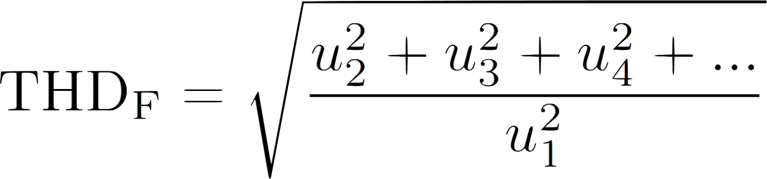
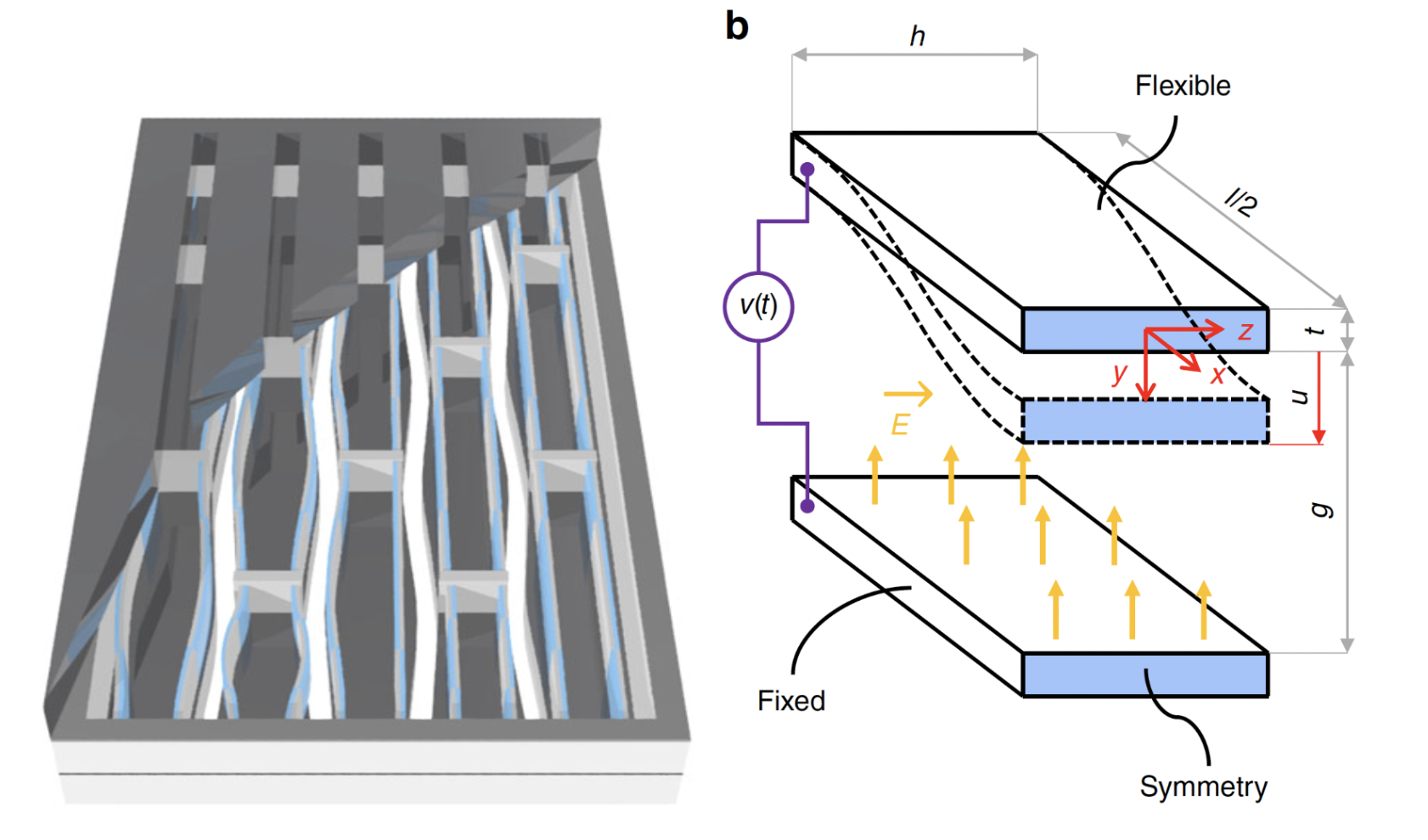
Fig. 3: Illustration of two parallel plates with an air gap (right) that approximate a unit from the full scale device (left). The bottom plate is fixed, the top plate is only clamped at the ends, but free to move elsewhere. The symmetry shown in the picture can be imposed in the middle (Melnikov et al. 2021 [1]).
Key results
Analysis and validation
The simulation was set up for a fundamental frequency of 100 Hz. It consisted of 192k degrees of freedom in total and was run on 4 cores for 2 minutes.
The animation in Fig. 4 qualitatively shows the beam deformed by the electrostatic force and the gas velocity field sandwiched between the two beams, which brings the effect of the squeeze-film damping. Fig. 5 shows the cross-section in the middle of the beam with a closer look at velocity vectors, demonstrating the detailed multiphysics effects captured by the simulation.
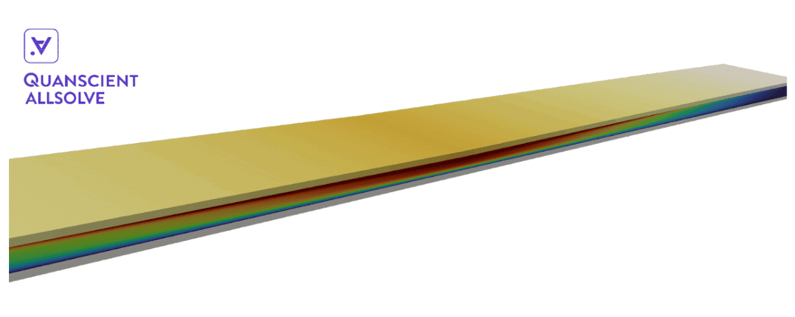
Fig 4: The beam deformed by the electrostatic force and the gas velocity field sandwiched between the two beams, which brings the effect of the squeeze-film damping.
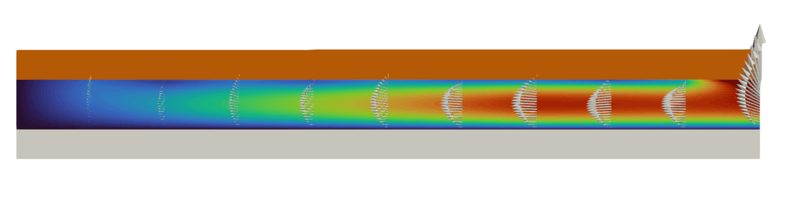
Fig 5: The cross-section in the middle of the beam showing a closer look at velocity vectors.
The simulation results were quantitatively compared with the experimental data reported in the literature.
As shown in Fig, 6, the results, normalized with respect to the maximum displacement, demonstrated good overall agreement between the simulation and the experimental measurements.
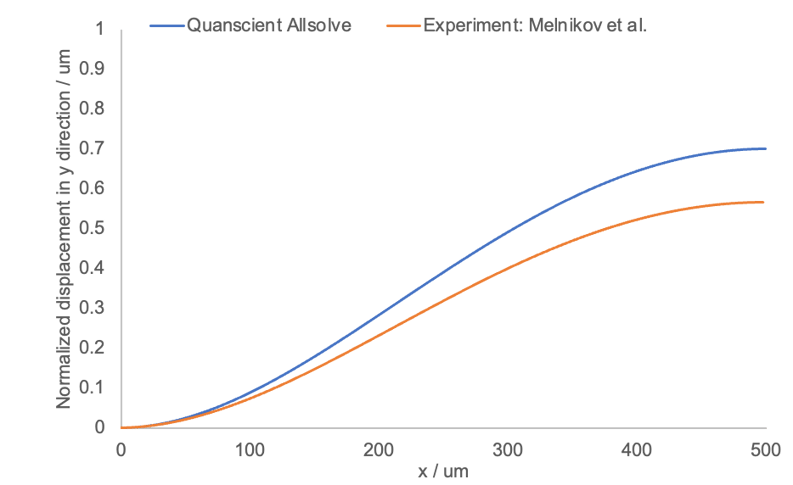
Fig 6: Comparison of simulated and experimental normalized displacements, showing minor overprediction at peak deflection.
Frequency and Voltage Sweeps
Once the results were validated against experimental data, we performed sweep over different actuation voltage values as well as frequency values in the audible range of 20 Hz to 20 kHz.
A set of 80 simulations was conducted across:
- Frequency range: 20 Hz–20 kHz
- Voltage range: 5–25 V
- Runtime: 2 minutes per simulation
- Total computational cost: ~10 core-hours (4 cores per case)
Results show that THD increases with applied voltage, consistent with the quadratic voltage dependence of electrostatic force.
-png.png?width=758&height=1247&name=Frequency%20(Hz)-png.png)
Fig 7: The results obtained for five different actuation voltages. As the voltage increases, the total harmonic distortion increases across the frequency range.
Nonlinear Squeezed-Film Damping Effects
The interaction between beam motion and gas film introduces damping that varies nonlinearly with displacement. The multiharmonic FSI model combining Navier-Stokes and linear elasticity captures this behavior accurately.
A comparison with Melnikov et al., ICSV 2023 [3] shows close agreement with other numerical results and homotopy approach for different quality factors.
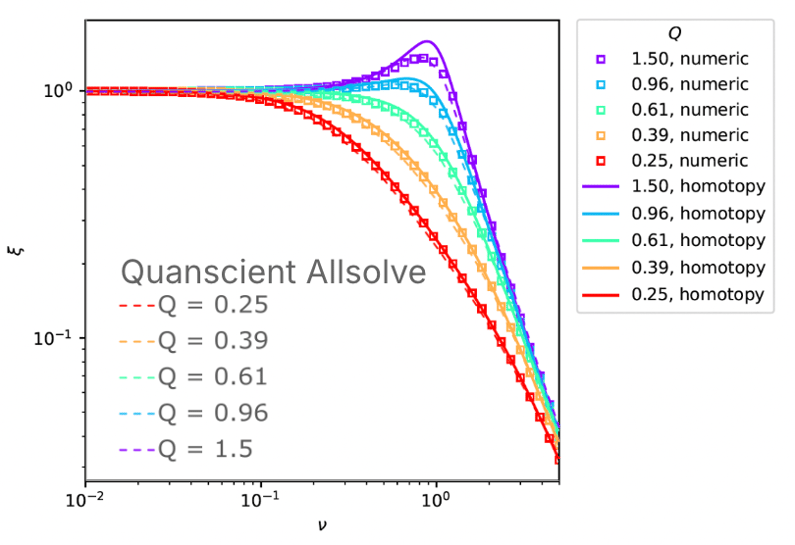
Fig 8: Comparison of simulated damping effects with literature data [3].
Design exploration
AI Surrogate Model Development
After demonstrating that Quanscient Allsolve can efficiently generate large-scale multiphysics datasets, the next step was to use this data for building accurate AI surrogate models. These models enable rapid design exploration and optimization, allowing engineers to push performance boundaries while maintaining design constraints.
For demonstration purposes, the microspeaker model was simplified from a full three-dimensional representation to a 2.5D cross-section at the beam’s midpoint. Because this cross-section alone does not capture the complete elastic response of the entire beam, an equivalent lumped spring with a calibrated stiffness coefficient was introduced. This spring reproduces the same dynamic behavior as the full 3D model while significantly reducing computational cost.
The geometry was parameterized in three main design variables:
- Beam width (W)
- Beam thickness (T)
- Initial air gap (g₀)
The opposite side of the moving plate was modeled with an air gap that is a fixed multiple of g₀. Although not explicitly shown, the effective stiffness of the structure remains a function of the beam cross-section, ensuring mechanical equivalence to the full device.
Using this reduced model, frequency-domain harmonic balance simulations were performed across the audible range (20 Hz – 20 kHz) at a constant driving voltage amplitude of 25 V. By sweeping the geometric parameters W, T, and g₀, a comprehensive dataset of 12,500 nonlinear simulations was generated (Fig. 10). The entire data generation took less than 20 minutes, consuming approximately 14 core-hours.
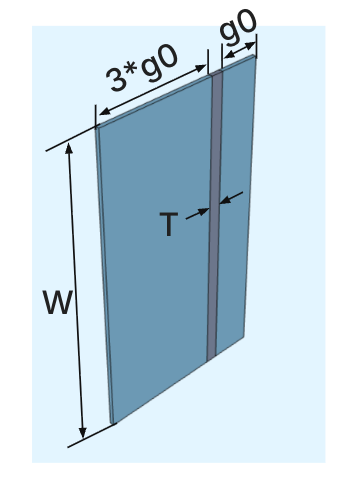
Fig 9: Reduced 2.5D microspeaker model with equivalent stiffness and design parameters (W, T, g₀).
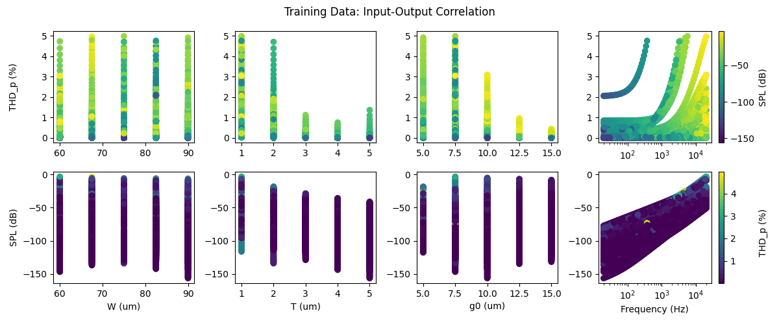 Fig 10: Training data input-output correlation.
Design objectives were defined at a frequency of 1 kHz and evaluated at a selected spatial point within the pressure field:
- Maximize sound pressure level (SPL, dB)
- Minimize total harmonic distortion (THD, %)
The generated dataset split and 80% of it was used to train an AI surrogate model, which was then validated on 20% unseen data. The surrogate accurately reproduced nonlinear responses while running at a fraction of the cost of full FEM simulations. The final outcome is an efficient, data-driven design methodology that couples multiphysics simulation and AI optimization, enabling rapid discovery of optimal MEMS microspeaker configurations.
Because SPL and THD are inherently competing objectives (higher SPL tends to increase harmonic distortion), the output-output correlation in Fig. 11 shows a Pareto front representing the best achievable trade-offs. Each point on the Pareto front corresponds to an optimal design where improvement in one objective necessarily compromises the other.
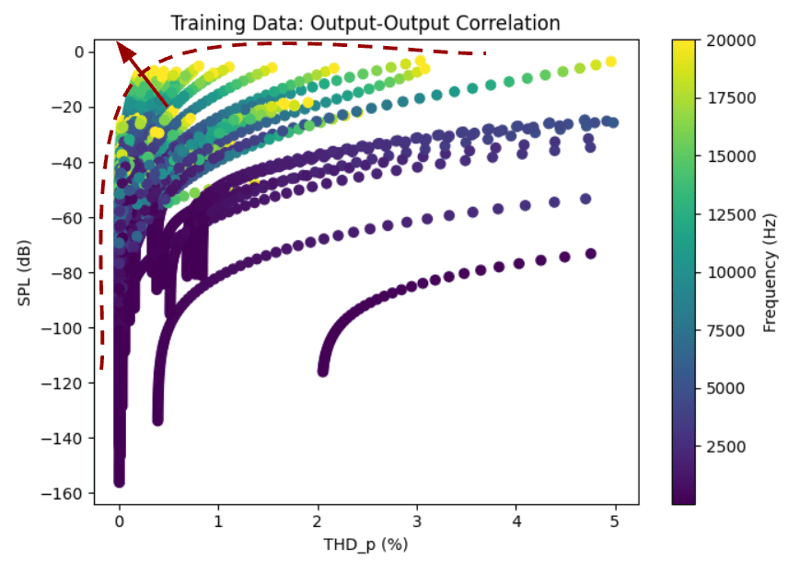 Fig 11: Training data output-output correlation showing Pareto front. Optimal design-front goes in the direction of the arrow.
Pareto Front Analysis and Optimization
Since the Pareto front shows the trade-off between the SPL and THD, the key question was whether we can push this Pareto front to the further left and top in this plot by using AI surrogate, in other words, a design that delivers higher SPL while reducing or maintaining a similar level of distortion. To investigate this, we scanned the region around the existing Pareto front using the AI surrogate model, beginning from the best baseline design.
The surrogate predicted a new Pareto front, shown as red dots in Fig. 12, which expanded the explored parametric design space. The blue dots in the figure represent the original training data. In this study, we started with a reasonably good baseline design exhibiting about 0.13% THD. It was encouraging to observe that there could be additional configurations providing higher SPL that were not captured in the original parametric sweep.
To verify these newly predicted designs, we conducted Allsolve simulations for the corresponding points on the surrogate-generated Pareto front. The Allsolve results, represented by orange circles, confirmed that the Pareto front indeed expanded. Although a one-to-one comparison between the surrogate predictions and Allsolve simulations may show some deviation, the overall agreement validates the surrogate model’s predictions.
Based on these results, the verified data from Allsolve’s Pareto front was selected as the reference for design improvement. This verified front clearly demonstrates that it is possible to achieve about 30% higher SPL while keeping THD nearly unchanged, confirming the effectiveness of the AI-assisted optimization approach.
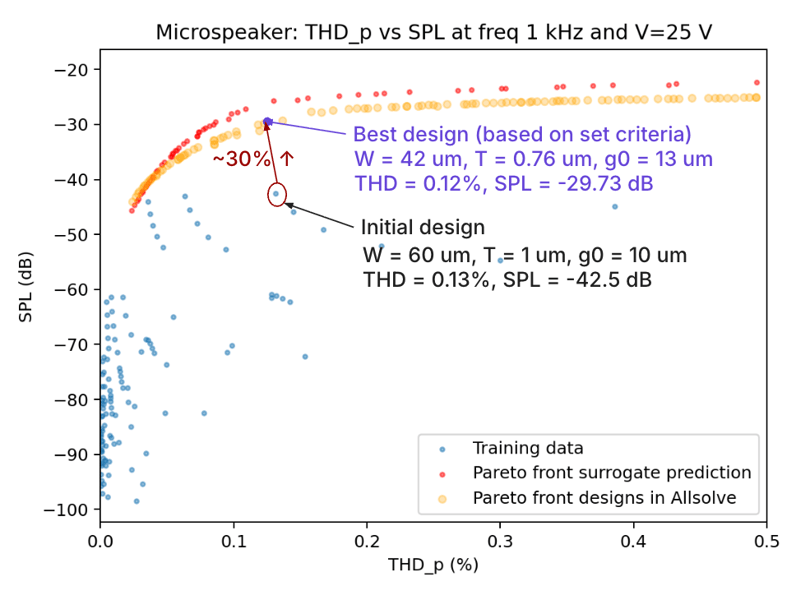
Fig. 12: Pareto front analysis showing parametric sweep results (blue), AI surrogate predictions (red), and Allsolve-validated designs (orange).
Uncertainty Analysis
The AI surrogate was trained not only to provide a single prediction for each key performance indicator (KPI), such as THD and SPL, but also to output a range band for each KPI. This range serves as a direct indicator of the model’s uncertainty regarding its prediction, the narrower the band, the higher the model’s confidence.
Ideally, the true value (ground truth) from validation data should fall within this predicted range band. We verified that this condition holds for the majority of the dataset, confirming that the trained network reliably quantifies its own predictive confidence across the full range of simulated designs.
Coverage results:
- THDₚ: 88.5%
- SPL: 99.5%
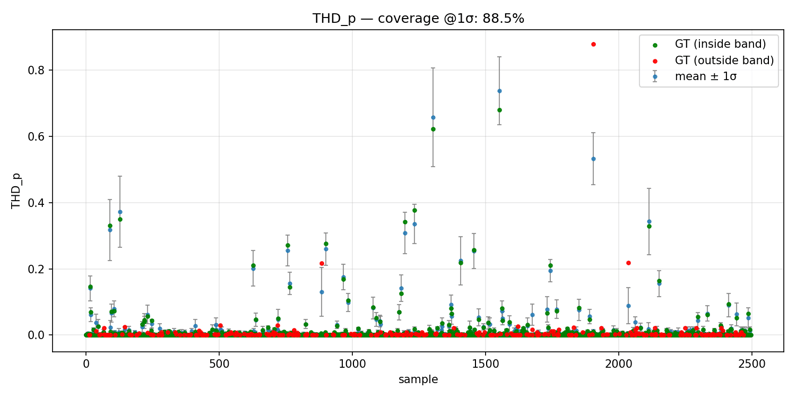
Fig. 13: AI surrogate uncertainty bands for SPL and THD predictions across the dataset.
Monte Carlo Analysis
The AI surrogate was further used for a Monte Carlo analysis to find the impact of tolerances in the design variables due to manufacturing processes. For this study, the optimal design was selected, and the dimensions W, T, and g₀ were varied by ±10%, assuming this represents ±3σ of manufacturing process variation.
This analysis demonstrates that even when the best design is identified through simulations, a 10% deviation in the manufacturing process can lead to substantial differences in the performance of actual prototypes. For instance, if 10,000 units were produced following a Gaussian distribution of variations, the resulting spread in performance would appear as shown here in Fig. 14.
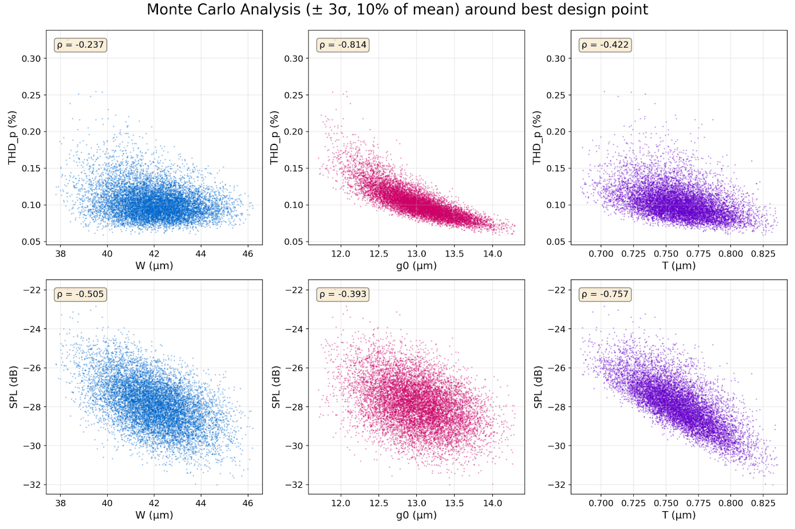
Fig. 14: Monte Carlo analysis using the AI surrogate.
If it is decided that a 30% deviation in THDₚ and a 5% deviation in SPL are acceptable, the question arises: how many prototypes would meet these criteria and ultimately deliver the desired quality?
The answer can be determined through a yield analysis. In this case, 72% of the prototypes would satisfy the specified limits as illustrated in Fig 15.
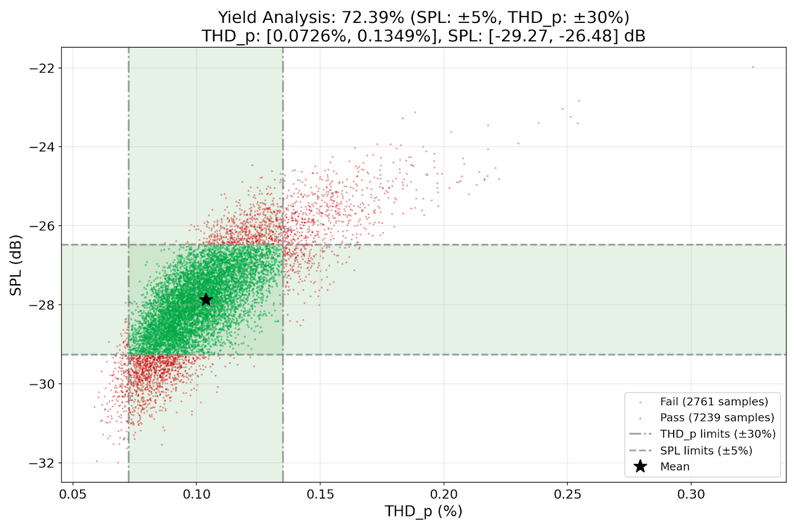
Fig. 15: Yield analysis showing designs that pass or fail the set criteria. Green dots indicating designs that pass both criteria of SPL and THD of pressure.
Based on this result, one could either improve the manufacturing process to reduce deviations or expand the allowable KPI range to increase the yield. If we decide to relax the KPI criteria, we can build a yield map as shown in Fig. 16, that shows how the KPI criteria should be relaxed permitting the manufacturing process to achieve desired level of yield.
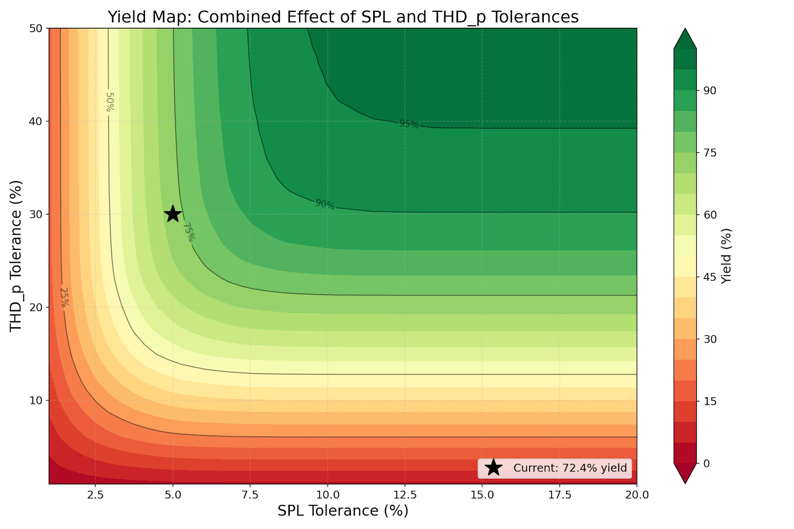
Fig. 16: Yield map showing the combined effect of SPL and THD of pressure on the final yield of the process.
At this point, an engineer may be concerned about the accuracy of the results as these are predicted by the AI surrogate. To verify these results, we ran simulations in Allsolve that represent the four corner points of the yield window and a subsample of 500 designs from the Monte Carlo analysis. Fig. 17 shows the comparison of the Allsolve simulation results and the AI surrogate predictions. The designs are slightly shifted towards the bottom-right direction, which is consistent with the observation in the previous Pareto front analysis.
%208-png.png?width=791&height=528&name=Neld%20Analo%208%2010-0120%2c%2000134-5-%20Spa%20(-22-29-%2026-48)%208-png.png)
Fig. 17: Yield analysis plot with Allsolve subsamples and four corner points corresponding to the yield window.
The central question is the practical utility of the AI predictions. Specifically, can the AI output be refined using a minimal number of computationally expensive simulations? To address this, we applied a bilinear transformation to the AI surrogate's predicted data. This transformation was anchored by four corner points derived from the Allsolve simulation data. The results (Fig. 18) demonstrate that correcting the AI predictions with a small set of reliable data—in this case, the four Allsolve simulations—can maintain the reliability of the AI's underlying predictive power. Furthermore, 500 Allsolve subsamples were used to validate the effectiveness of this transformation.
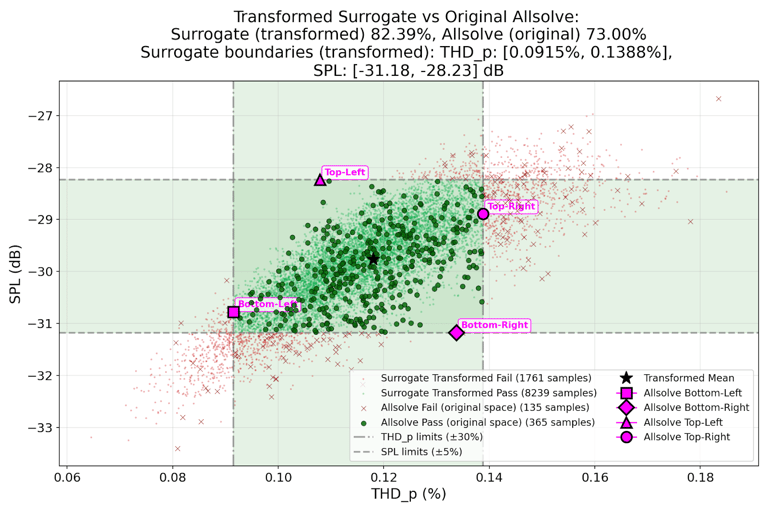
Fig. 18: Transformed Yield analysis plot.
Conclusion
This study demonstrates a comprehensive workflow for MEMS microspeaker simulation and optimization using Quanscient Allsolve. The harmonic balance approach captured nonlinear physical effects such as electrostatic spring softening, fluid–structure interaction, and squeezed-film damping.
The simulation results were validated against experimental data, confirming accuracy and robustness. The large-scale dataset enabled the creation of an AI surrogate model, which dramatically reduced computation time for design exploration.
The integrated MultiphysicsAI approach successfully identified optimal designs achieving ~30% improvement in SPL while maintaining low THD. This framework can be extended to similar MEMS and acoustic devices for rapid, reliable, and scalable design and manufacturing optimization.
Quanscient Allsolve enables engineers to:
- Perform complex, fully coupled MEMS simulations.
- Confidently optimize designs based on relevant KPIs such as THD and SPL.
- Extract quantities for Reduced Order Models (ROMs) and system-level design integration.
- Generate an AI surrogate model
- Rapid pareto front analysis to discover optimal design
- Uncertainty analysis of the model to build confident designs
- Monte Carlo analysis and yield maps to improve the final yield and manufacturing process
References
[1] A. Melnikov, H.A.G. Schenk, J.M. Monsalve et al., Coulomb-actuated microbeams revisited: experimental and numerical modal decomposition of the saddle-node bifurcation, Microsyst Nanoeng, 7, 41 (2021).
[2] B. Kaiser et al., Concept and proof for an all-silicon MEMS microspeaker utilizing air chambers, Microsyst Nanoeng, 5, 43 (2019).
[3] Melnikov et al., Nonlinear Squeezed-Film Damping Effects: Comparison with ICSV 2023.
