
Thinshell coil approximation
Accelerating partially insulated coil analysis via thinshell approximation
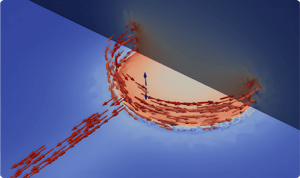
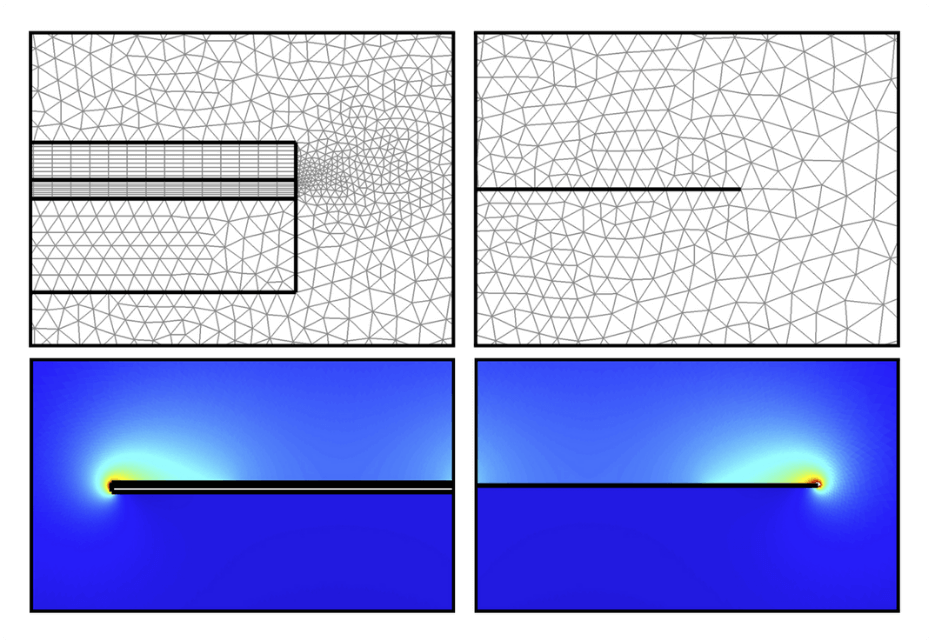
Simulating Partially Insulated (PI) or No-Insulation (NI) coils is computationally expensive. The insulation layers are microscopic compared to the magnet bulk.
Modeling these layers as full 3D volumes requires an extremely fine mesh, leading to massive element counts and slow solve times. However, ignoring them fails to capture the critical "turn-to-turn" current sharing during ramp-up.
The demo utilized Quanscient Allsolve’s Thinshell formulation, which treats the insulation layer as a 2D boundary condition rather than a 3D geometric volume.
This approach allowed the team to perform a parametric sweep over conductivity values to simulate magnetic field ramp-up dynamics without the computational penalty of volume meshing.