
MEMS gyroscope damping analysis
Predicting real-world MEMS gyroscope performance via coupled damping analysis
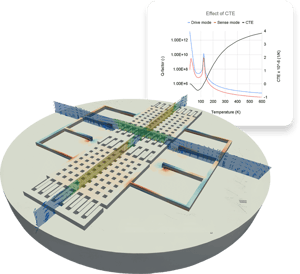
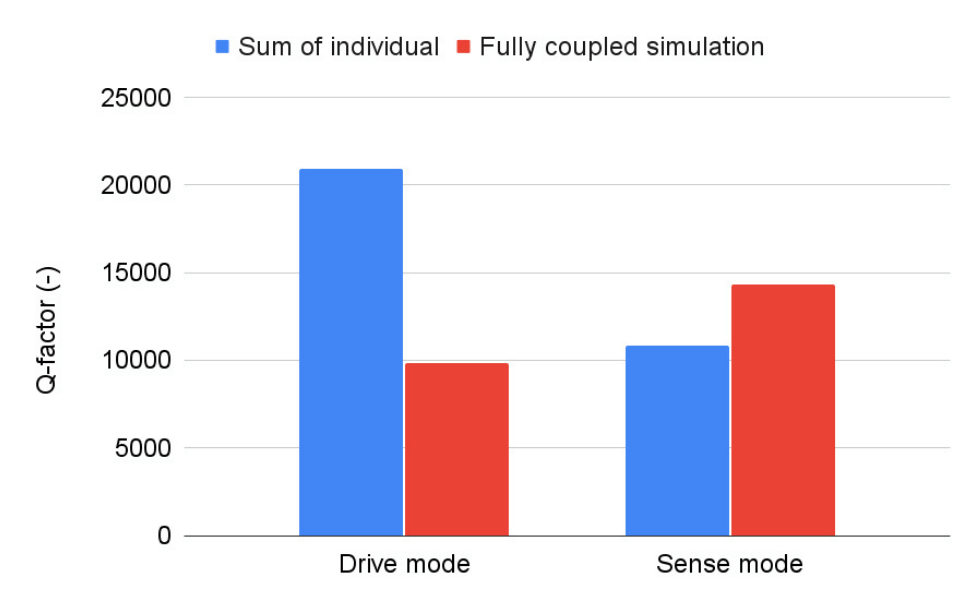
Designing MEMS gyroscopes requires precise tuning of eigenfrequencies. However, traditional simulation methods often decouple environmental effects (anchor loss, squeeze-film damping) or use simplified "inverse-sum" approximations, leading to inaccurate quality factor (Q) predictions.
We utilized Quanscient Allsolve to run a fully coupled multiphysics simulation involving mechanical, thermal, and fluid domains. The model included 2.4 million degrees of freedom and performed parametric sweeps across temperature ranges (-60°C to 120°C) and varying beam widths.